Alicia Yu
Professor Gross
Foundations of Education
01 February 2026
On Majoring in Film
It was halfway through my junior year of high school. I was 16 years old. I woke up from a cold sweat in the middle of the night, after a day of ruminating on what I wanted to major in. I decided from that moment on that I wanted to be a filmmaker. This moment was significant to me because my high school was STEM focused. I went to Stuyvesant High School, a school known for STEM excellence. Many people wanted to go to college and major in the pure sciences, computer science, mathematics, or business. Artists were few and far between at my high school.
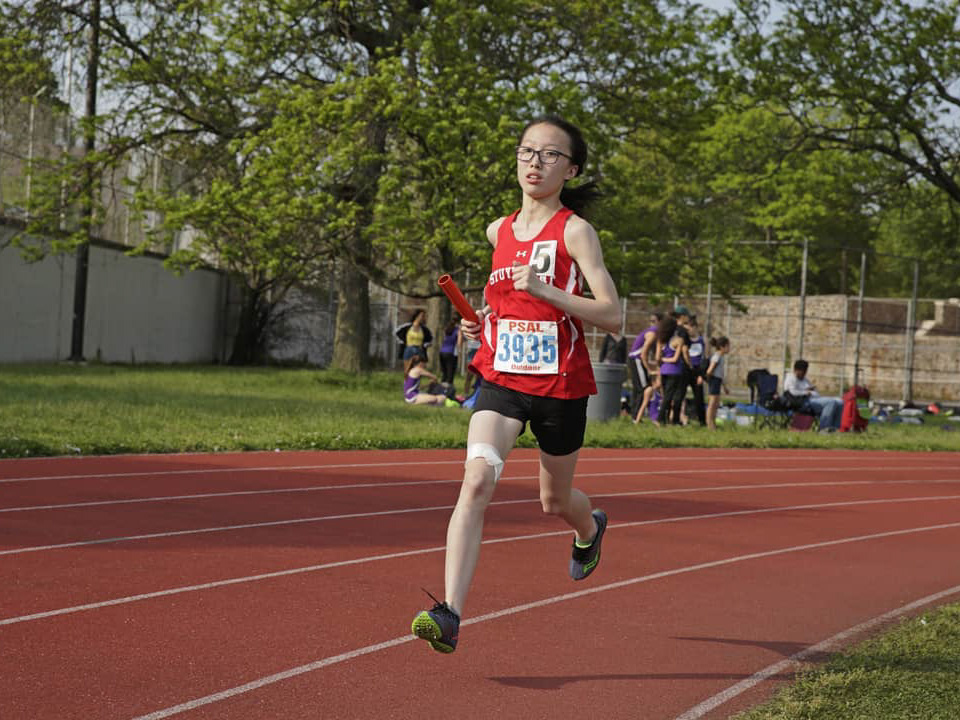
I was really scared of what my mom would think. My mom’s philosophy with college was to go to college, major in something “useful”, and have me graduate with a six-figure job. However, I didn’t want that. I grinded out biology, chemistry, and calculus classes, and I hated all of them. The only thing I really enjoyed was taking videos with my friends during our track meets. I had been making videos since 5th grade, and I really loved it.
I was also really scared because filmmaking felt like a far fetched dream. It felt like a dream only the “elite” could achieve.
I went through the next few days reflecting on this thought of potentially going to film school. I would be one of two people to get into filmmaking from my high school (a very large one at that, 820 graduating seniors), and therefore, there wouldn’t be many people to turn to for advice. However, I knew I made the right decision because I didn’t want to be miserable any longer.
Then I started my senior year, and I met Mrs. Chu. Mrs. Chu was my painting teacher at Stuy. Our interactions became stronger through a happy accident. My dad told her during parent teacher conferences that I wanted to major in film. She then asked me about this in class. I told her, “yes I was,” and we started talking more about how she could help me. She was one of the first teachers at Stuy that did that for me. I felt like she genuinely cared about me outside of school and wanted to get to know me as a person. Even now in my day-to-day life, meeting those kinds of people is rare.
It was also in this first semester that my dad graciously bought me my first DSLR. I brought it to school and snuck it into my classes everyday, trying to come up with ideas of films to edit later on. However, I felt like I was running out of time—which looking back, sounded so dramatic, but:
Going into college applications, I felt so lost. I was so stressed about the fact that I didn’t have the highest GPA or SAT score, and about the fact that I only wanted to major in film. I didn’t want to do anything more in my life. But I had realized, if I wanted to go to USC or NYU for film school, I probably should’ve been doing film since the beginning of high school (or earlier). Doubt creeped in my mind once again.
I kept thinking, “How the hell can I be a filmmaker if I started too late?” But I pushed it away, because I told myself that in five years, I wish I would’ve started at that age. So I kept grinding, and making the most out of my situation. Mrs. Chu encouraged me to apply to a microgrant artist program, and I got in. They would grant me $80 to create a project and present it at a gallery in the Stuy auditorium. In the past, I would’ve shrunk at that kind of thought. The fact that I actually could be granted… money, to make art? Mrs. Chu opened my eyes to understanding that potential.
I don’t come from a family of artists. The closest thing they were to the art world were entrepreneurs. “Art was for people who were already rich, or for people who wanted to remain poor for the rest of their lives,” I thought. But I was determined to dispel this notion. Why couldn’t I just do what I wanted to do? Why did I always have to conform to what others thought of me?
I had already gone to Stuy. I didn’t like it. I despised a lot of my classes. All I wanted to do was go home and work on my skills in Premiere Pro, and edit YouTube videos.
I’m glad I stayed with it.
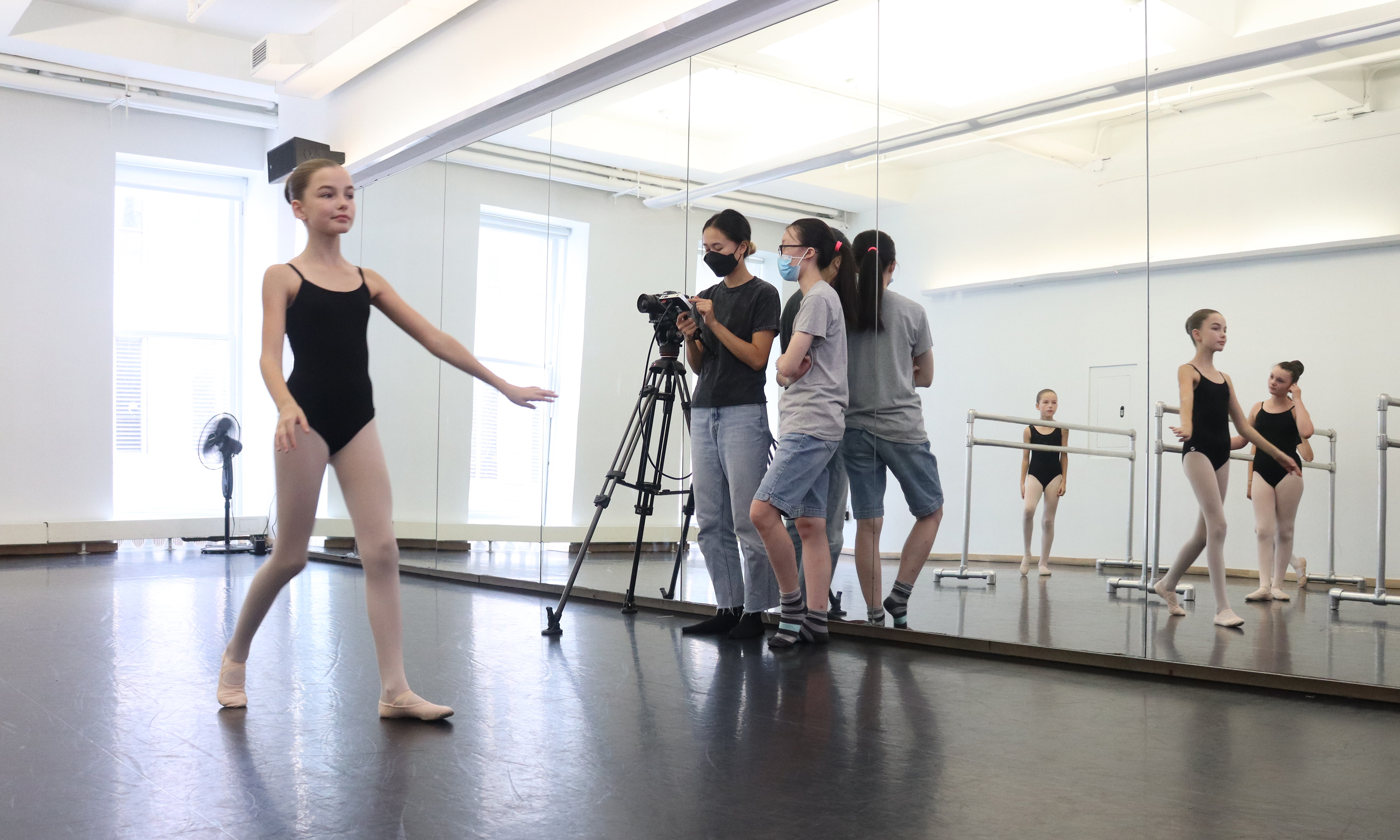
In my second semester of my senior year, I became a cinematography fellow at Reel Works, a youth filmmaking company. I was one of their youngest fellows ever. By the end of the program I had won “Best Cinematography” at their annual film festival.
A few months later, I won a National YoungArts award in film. I had also gotten that email in the middle of a Production Assistant gig for NBC.
This experience both aligned with and diverged from dominant educational values discussed in class, particularly around the purpose of schooling and who is empowered to define educational success. Much of my high school experience reflected a functional view of education: school as a pipeline to economic productivity, competitiveness, and “useful” careers.
In contrast, Mrs. Chu’s approach reflected a more humanistic and student-centered educational philosophy. Rather than viewing education as preparation for a high-paying job, she treated learning as a process of identity formation, self-expression, and agency. She supported me not because filmmaking was statistically “safe,” but because it was meaningful to me. This reflects educational values discussed in class that emphasize schooling as a space for self-discovery and personal growth. I find that these values are marginalized in highly standardized educational environments.
I also internalized the idea that filmmaking was something reserved for the “elite” or for people who already had access to resources and cultural capital. Mrs. Chu disrupted this narrative by helping me access material support, such as the microgrant program, and validated my aspirations as legitimate.
Beyond teaching painting, Mrs. Chu modeled what it looks like for an educator to advocate for students within a system that does not equally support all forms of learning. I learned from her that education can be an act of resistance… that a teacher’s role is not only to teach material, but to help students imagine futures they wanted to see themselves in. This shift in perspective impacted my educational trajectory, as it gave me the confidence to pursue filmmaking seriously and ultimately lead to gaining opportunities at Reel Works and YoungArts.
My experience suggests that without educators who recognize and nurture individual students’ passions, many forms of potential remain lost. Mrs. Chu’s support demonstrated an alternative purpose of schooling: to encourage students to expand the range of futures that can be possible.
Photo Credit: Liam Mejia-Moran